Roth IRA for a Child
IRA for Children
Traditional or Roth IRA
When your looking to start an IRA, your first decision will be to choose Traditional or ROTH. There is a lot of Individual Retirement Account Information available. Below you will find eight books we recommend for a better understanding of Traditional and Roth IRAs. Begin with these.We generally find ROTH IRA's to be the most beneficial, but there are some exceptions to this depending on each persons individual situation. The rules for an IRA impacting you will vary depending on your age, earned income and general desires for your financial portfolio.
For example, you might find that choosing a Traditional IRA during the years where your child attends college might help you qualify for significant amount of additional student financial aid.
The Top 5 Benefits of Starting a ROTH IRA
- Interest and Gains in a Roth IRA grow tax free
- Withdrawals from a Roth IRA are tax free
- Roth IRAs have no required mandatory withdrawals (RMDs)
- Because there's no requirement to withdraw, your savings keep growing
- With no withdrawals, you reduce the overall income reported on taxes
Click here to Subscribe to Kids and Money Today, our sister site that keeps you current on financial news for parents and kids.
IRA for Children
- Are you ready for retirement?
- What's your plan for your IRA when you pass away?
The more you know ~ the better plan you will have.
Get started with a better plan for you and your kids today:
Sign up for our free Kids and Money Today news!
See our growing list of Jobs For Kids
Find something your kids are passionate about, get the earned income flowing, and this will make it easy to start an IRA for children.
Kids and Money Today Blog
We started the Kids and Money Today Blog for a place to further connect with our readers, parents, and children looking for tips to create better financial portfolis and create an IRA for children.Kid's Roth IRA Handbook Updates
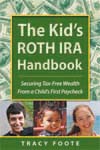 One good thing about an IRA for children is the rules are much simpler and don't frequently change. Children are not retiring and usually, not converting 401ks, inheriting IRAs, or looking to rollover their Individual Retirement Accounts.
This page is for owners of the Kid's Roth IRA Handbook and acts as a quick check of any changes or new topics that may be included in the next printing.
Don't have yours yet?
The Kid's Roth IRA Handbook:
The next printing will include:
- The Roth IRA calculator included in this book has had trouble lately in an internet explorer browser. We suggest trying to open it in a firefox browser. If you still have trouble, even though the calculator provided was a favorite, please be reminded that a google search will often provide similar free Roth calculators.
- How long do I have to keep my tax forms? While most accountants advise that one can throw away tax records after a certain number of years, we do not recommend throwing away your tax records that document earned income for a Child Roth IRA. Kids, this is not that difficult. Get a box, write TAXES on it and every year, take a big envelope (or two or three if needed) and mark it TAXES. Keep these files until you have cashed in your Roth IRA.
- Form 5498: This is a summary form you receive which shows your contributions in your Roth IRA account. We recommend keeping these forms with your Roth IRA account statements until retirement age.
- FAFSA Application (Free Application for Federal Student Aid) Did you know a Roth IRA is not considered an asset when filing the FAFSA application?
- BSO Passwords: Parents creating Form W-2s using Business Services Online are reminded to change their passwords at least once a year so they do not have to re-register.
More Books to Help with Roth IRAs
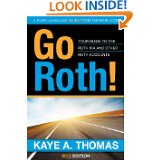 Go Roth
This plain language book makes it easy to learn how you can get the most from Roth accounts, including Roth IRAs and Roth accounts in 401k and 403b plans. It helps you determine whether a Roth is your best choice, and takes you through all the rules and strategies for creating, maintaining, and using your account.
Kaye A. Thomas writes books on tax strategies for investors and maintains an award-winning website at fairmark.com. He graduated cum laude from Harvard Law School in 1980.
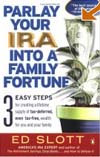 Parlay Your IRA into a Family Fortune
Ed Slott is without a doubt "one of the country's leading IRA experts" (Reader's Digest). Appearing at a time when virtually everyone is concerned about retirement savings, this authoritative thoroughly accessible book presents an easy-to-follow plan for making money, a lot of money, with your IRA. Slott shows readers how to choose the right financial advisor, manage vital information and deadlines, and create a retirement fortune that will not only benefit the individual, but continue to enrich beneficiaries for generations. This powerful, straightforward tool is the book for Americans interested in creating a fiscal windfall for the future. Again, all of the rules here will apply to a child Roth IRA.
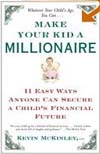 Make Your Kid A Millionaire
From Library Journal This book isn't as outrageous as its title makes it seem herein is sound advice for parents with young children. A financial planner and parent, McKinley stresses that providing financial security for our children doesn't concern money as much as it does freedom from ordinary economic pressures like earning enough money in a career, needing to work into old age, or struggling to afford the best possible college. Lessening these pressures, he wisely advises, "doesn't guarantee a life of quality, but it sure gives [your child] a better shot at happiness than not doing anything." McKinley's tone is helpful and humorous, and his style facilitates quick understanding. As a primer on investment vehicles (e.g., what's a zero coupon treasury?), this resembles the ubiquitous Personal Finance for Dummies (Hungry Minds, 2000. 3d ed.) but targets strategies and tips benefiting children (e.g., "a dollar a day saved at 10% annually gives a newborn baby over $2.4 million at age sixty-five").
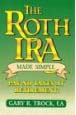 The Roth IRA Made Simple
Seasoned tax professional defines and discusses the Roth IRA in clear easy-to-understand language. Included are many examples and strategies to help individuals make informed decisions on contributing and converting to Roth IRAS. Chapter 5 deals exclusively with converting to a Roth IRA and contains a checklist of 27 items to consider before doing so. Tables, charts, and comparisons aid in helping to understand the qualifications and advantages of the Roth IRA. Learn how to withdraw funds free from tax and penalties. Makes an excellent reference guide. Since there is no age limit for a Roth IRA, all these rules apply to a Child Roth IRA as well.
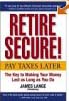 Retire Secure
Retire Secure! tackles the number one fear facing most IRA and retirement plan owners: running out of money too soon. Lange, a nationally recognized IRA expert, offers specific and practical strategies to successfully navigate the three stages of retirement planning: accumulation, distribution, and estate planning.
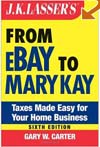 From eBay to Mary Kay
The ultimate guide to running a tax-efficient home-based business Today, millions of people are making either a full or part-time living selling things on eBay. Still more are making a living selling products from their home think Mary Kay and Avon. Many just entering this business are unaware of their potential tax liability. With J.K. Lasser's From Ebay to Mary Kay, leading tax consultant Gary Carter walks readers through the challenges of accounting for a home-based or on-line business. If your child has earned income from auctions, this book may be useful in accurately handling earned income to contribute to a child Roth IRA.
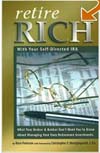 Retire Rich with Your Self-Directed IRA
In recent years many smart investors have exited the stock market because they have essentially lost control of their investments. They have relied on the advice and skill of their brokers, bankers, and financial advisors. Many retirement accounts have dwindled or not increased. Fortunately, there is a great but little-understood alternative: the self-directed IRA. This new book will teach you how to turn your IRA into a wealth-building tool that you control 100%! Take control of your investment future, and make sure your investments are performing for YOU, not someone else. This is an advanced book. If your child has a child Roth IRA and you want to research even more how to cut costs and maximize your return, this book may give some ideas.
Connect with us:



-
Make Money Online Using Zazzle -
YouTube SEO Ranking -
Student Aid -
Kid Roth IRA -
Baby Thank You -

Hooded Towel -
Potty Training Girls -
Potty Training Tips -
Potty Training Boys -
I Can Read Book -

Car Business
Card Holder


